
Table of contents
- First, Let’s Talk About North Vietnam
- A Quick Reality Check: When to Go, What to Pack, and How Cold It Actually Gets
- The History Bit: Why Sapa Looks a Bit Like the French Alps
- Location & Views: A Private Hill Above the Clouds – Literally
- Rooms: I Stayed in a Bungalow (and Yes, You Should Too If You Can)
- The Spa: That Herbal Bath Everyone Talks About
- Diva Karaoke: The Most Unexpectedly Wonderful Evening of the Trip
- Dining: Four Restaurants, One With the Highest View in Indochina
- Concierge: A WhatsApp Message Away
- Staff: Friendly Doesn’t Quite Cover It
- Weather & Packing for Sapa
- Health & Safety Basics
- Transport & Logistics Around Sapa
- Is It Worth It?
First, Let’s Talk About North Vietnam
If South Vietnam is where you go to sweat gloriously on a beach, North Vietnam is where you go to actually feel your fingers get cold – and, honestly, we didn’t know how much we needed that until we got there. This is a region that swings from the chaos of Hanoi’s Old Quarter (motorbikes, egg coffee, the constant sense that you’re one step away from becoming part of the traffic) to the eerie, otherworldly limestone towers of Ha Long Bay, all the way up to Sapa – a hill town so high in the clouds that on a misty morning you genuinely can’t tell if you’re looking at sky or valley.
Most people build a North Vietnam itinerary around three bases: Hanoi (the capital, and your arrival/departure point for almost everything), Ha Long Bay or Ninh Binh (for the boat-and-limestone-karst experience – Ninh Binh being the quieter, “Ha Long Bay on land” alternative), and Sapa (for mountains, mist, and the rice terraces you’ve definitely seen on someone’s Instagram). Give yourself at least 7–10 days if you want to do all three without feeling like you’re just collecting stamps.
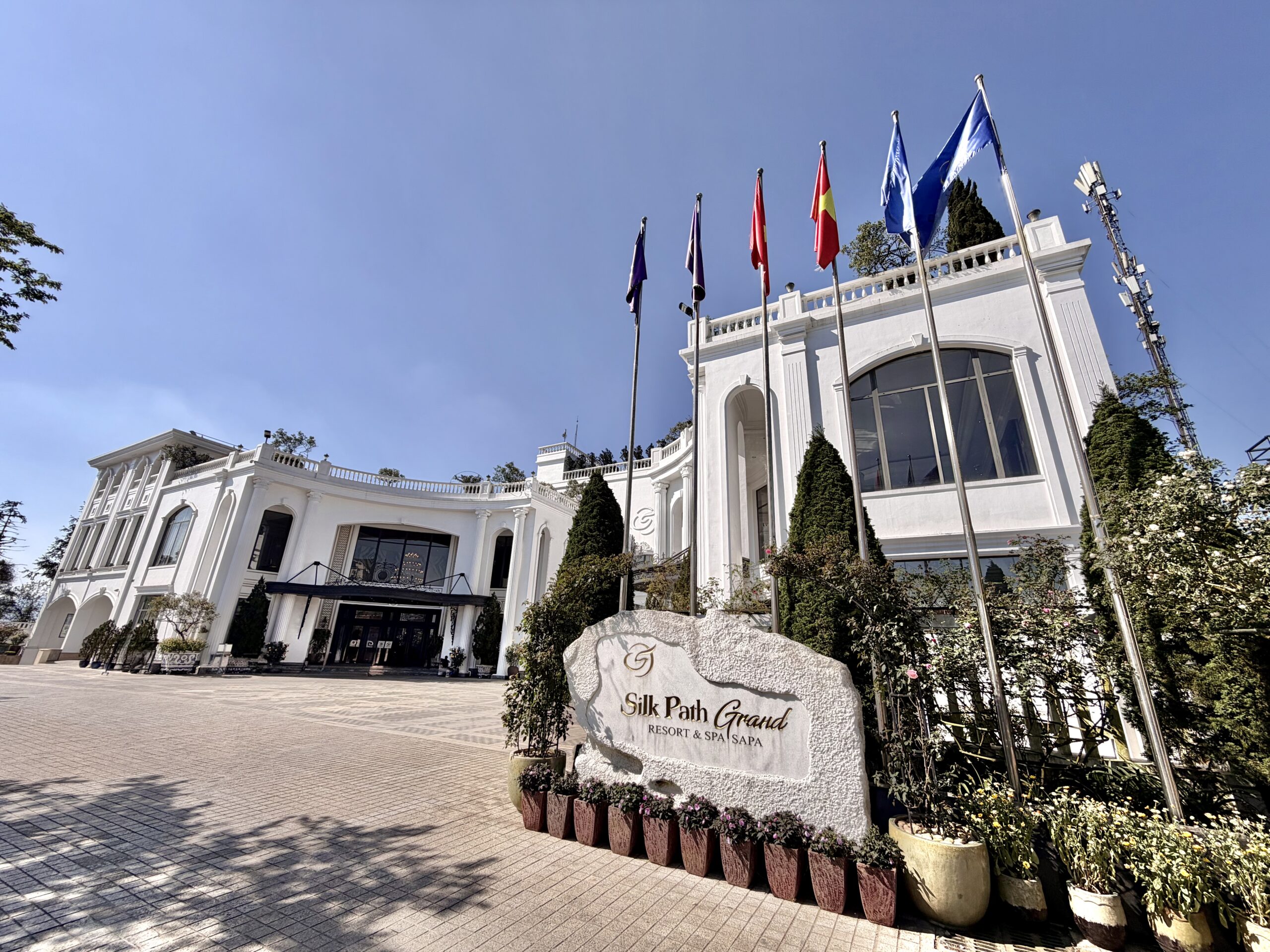
I stayed at Silk Path Grand Sapa Resort & Spa for the Sapa leg of our trip, and – spoiler – it might have been the single best decision of the whole itinerary.
Here’s everything you need to know, including what it’s actually like to have a mountain to yourself, why the karaoke room made me cry with laughter, and whether that free herbal bath is worth the hype.
A Quick Reality Check: When to Go, What to Pack, and How Cold It Actually Gets
Before we get into the good stuff, let’s cover the practical questions everyone actually googles at 1am before booking flights.
Best time to visit North Vietnam: The sweet spot is September to November and March to May – the shoulder seasons either side of the wet, humid summer and the bone-cold winter. September to November in particular is when Sapa’s rice terraces turn a deep golden colour before harvest, which is objectively one of the most photogenic things you will ever stand in front of.
Temperatures in the North: Sapa sits at roughly 1,600 metres above sea level, so it runs noticeably cooler than the rest of Vietnam – think 15 – 24°C by day and 10 – 15°C at night, with temperatures dropping further the higher you go (yes, it occasionally sees a light dusting of frost or even snow in the depths of winter, which surprises most people planning a “tropical” Vietnam trip).
Getting there: Most travellers reach Sapa via Hanoi – either a scenic (if slightly bumpy) 5 – 6 hour drive, or the overnight sleeper train to Lao Cai followed by a roughly 45-minute transfer up into the hills. Silk Path Grand Sapa can arrange pickups either way, which we’d genuinely recommend over freelancing it yourself, especially on the mountain roads near the resort. I actually travelled from Hanoi to Sapa with A21 Tours, a limousine bus service, and it was a genuinely comfortable way to cover the distance – reclining seats, plenty of legroom, and a couple of scheduled stops along the way for food and drinks, which made the 5 – 6 hours pass far more easily than we expected. If a private hotel transfer feels like overkill for your budget but the public bus feels like a step too far, this kind of limousine service is a solid middle ground.
Currency & cash: Vietnam runs largely on cash outside major hotels, so keep a stash of Vietnamese Dong on hand – most attraction tickets around Sapa run 20,000 – 150,000 VND per entry.
The History Bit: Why Sapa Looks a Bit Like the French Alps
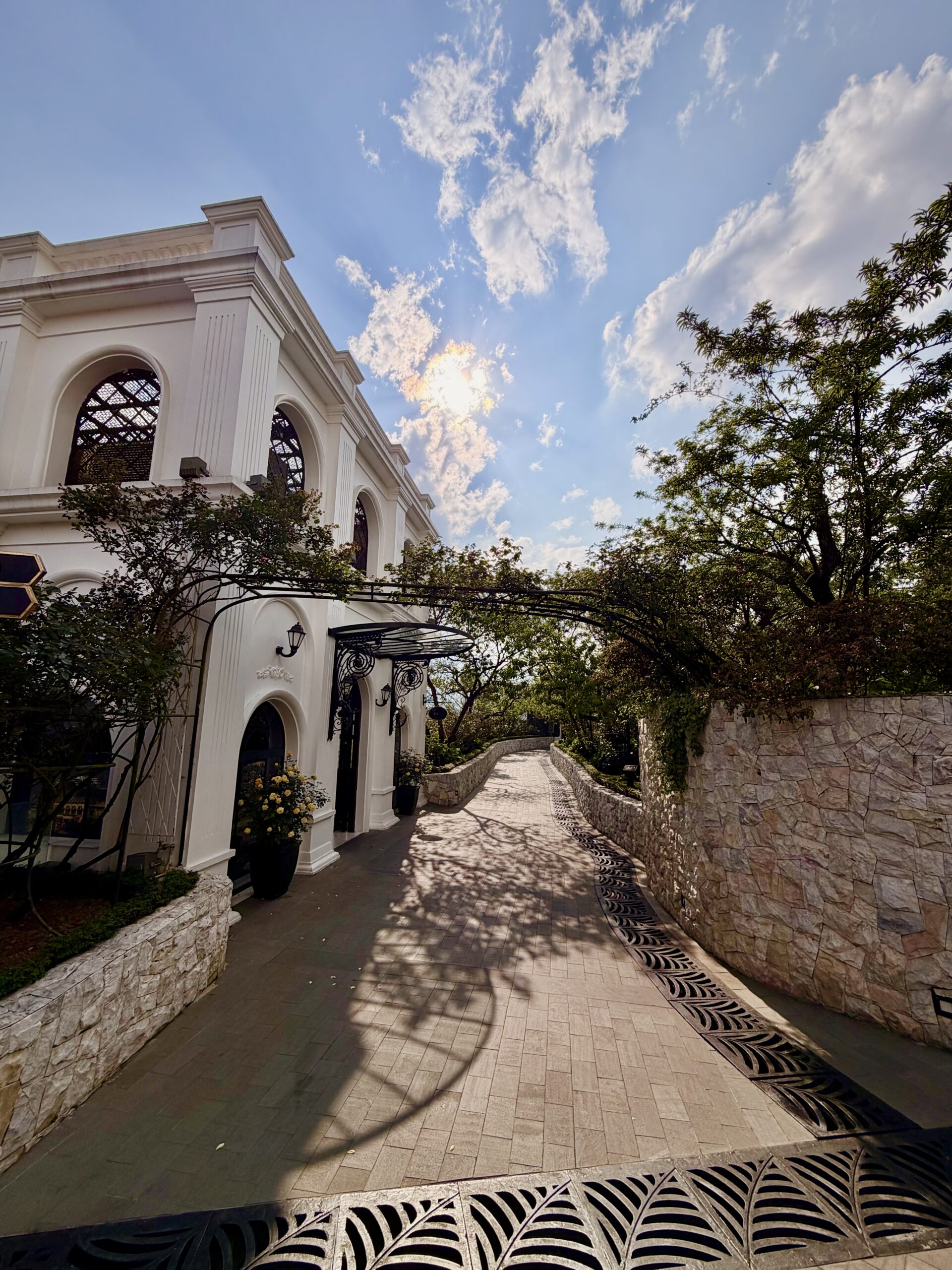
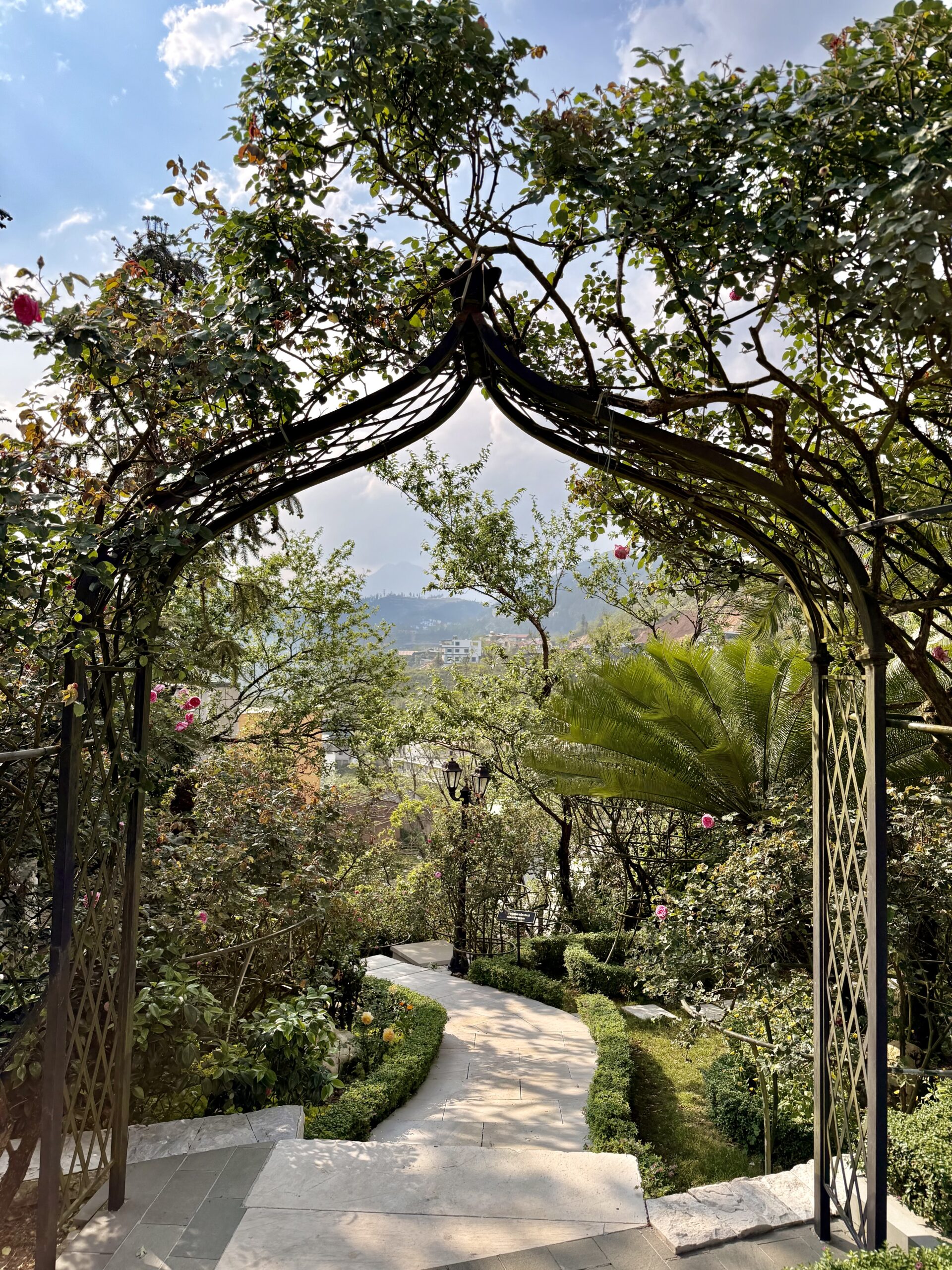
Here’s the fact that made our whole stay click into place: Sapa was originally developed by the French in the early 20th century as a hill station – a cool mountain retreat where colonial administrators could escape Hanoi’s brutal summer heat. That’s why the architecture around town, and particularly at Silk Path Grand Sapa, leans so heavily into elegant, regal European lines rather than what you might expect from a Vietnamese mountain town. Locals still sometimes call Sapa and its surrounding peaks the “Vietnamese Alps.”
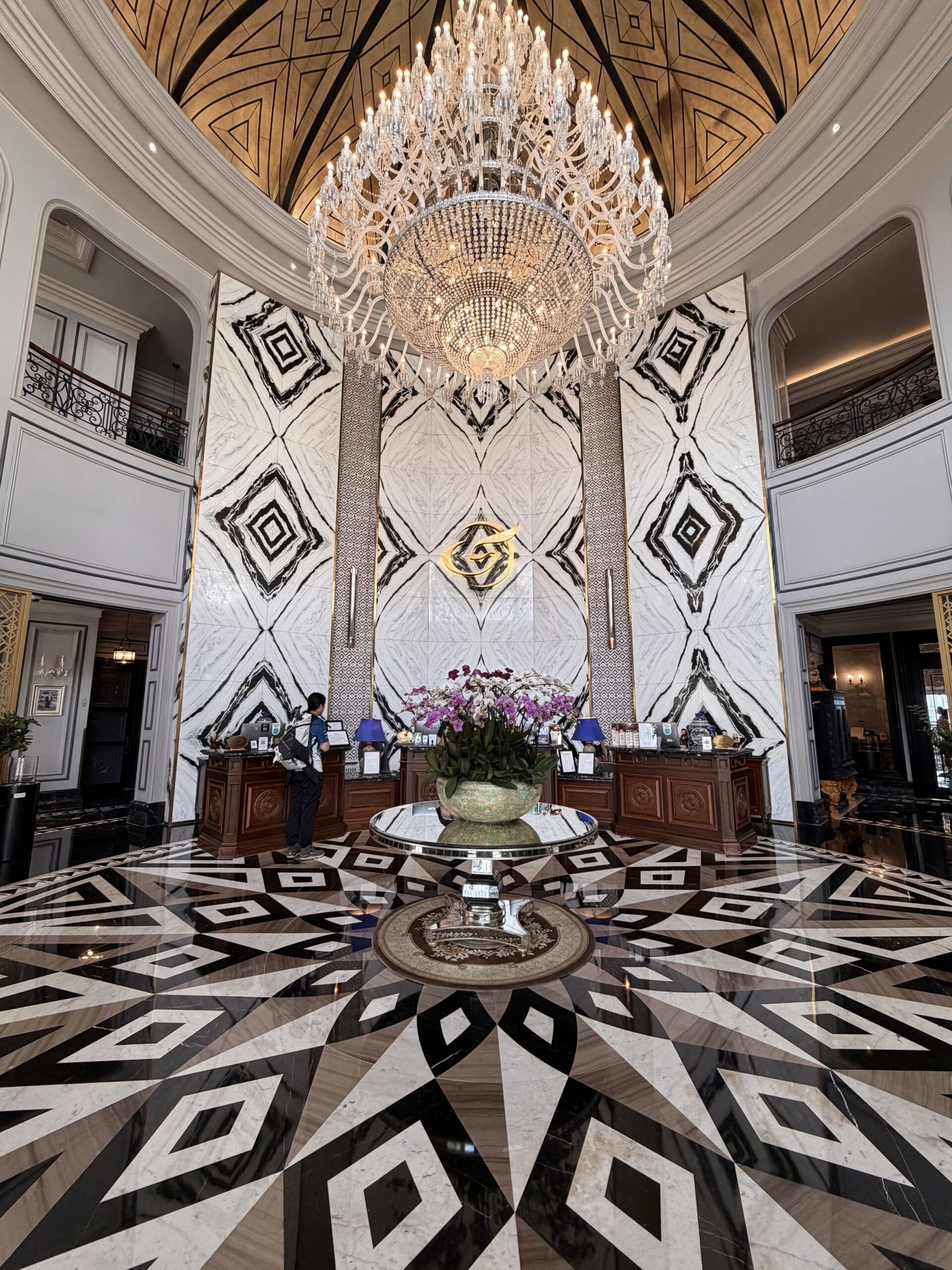
The resort itself is a relative newcomer to that legacy – it opened in November 2017, and less than a year later, in September 2018, it became the first and only property in Sapa to be officially certified as a 5-star resort by the Vietnam National Administration of Tourism. It sits across two hectares on its own private hill, with uninterrupted views of the Hoang Lien Son mountain range – the same range that’s home to Fansipan, the tallest peak in Indochina, often nicknamed the “Roof of Indochina.”
Location & Views: A Private Hill Above the Clouds – Literally
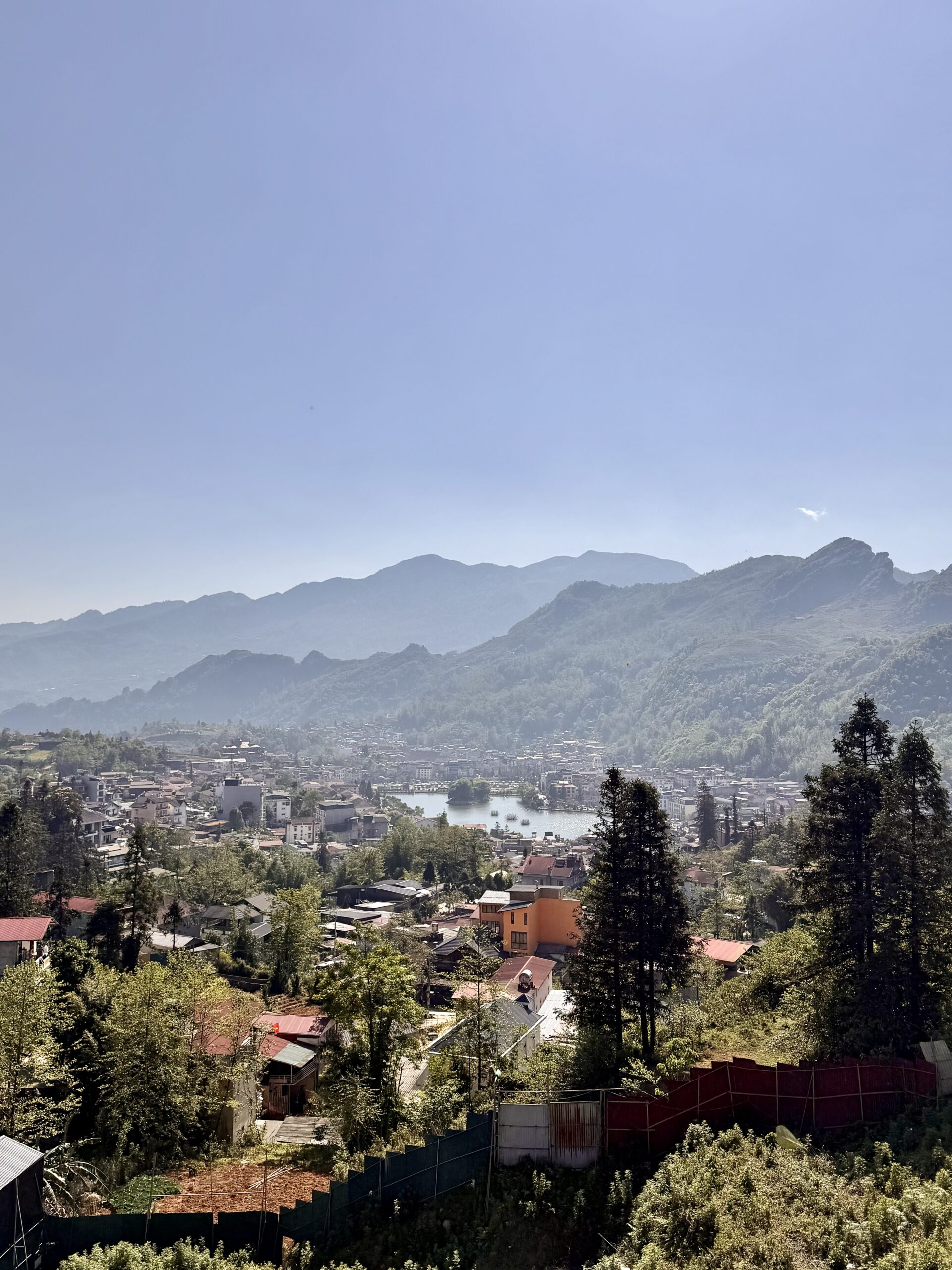
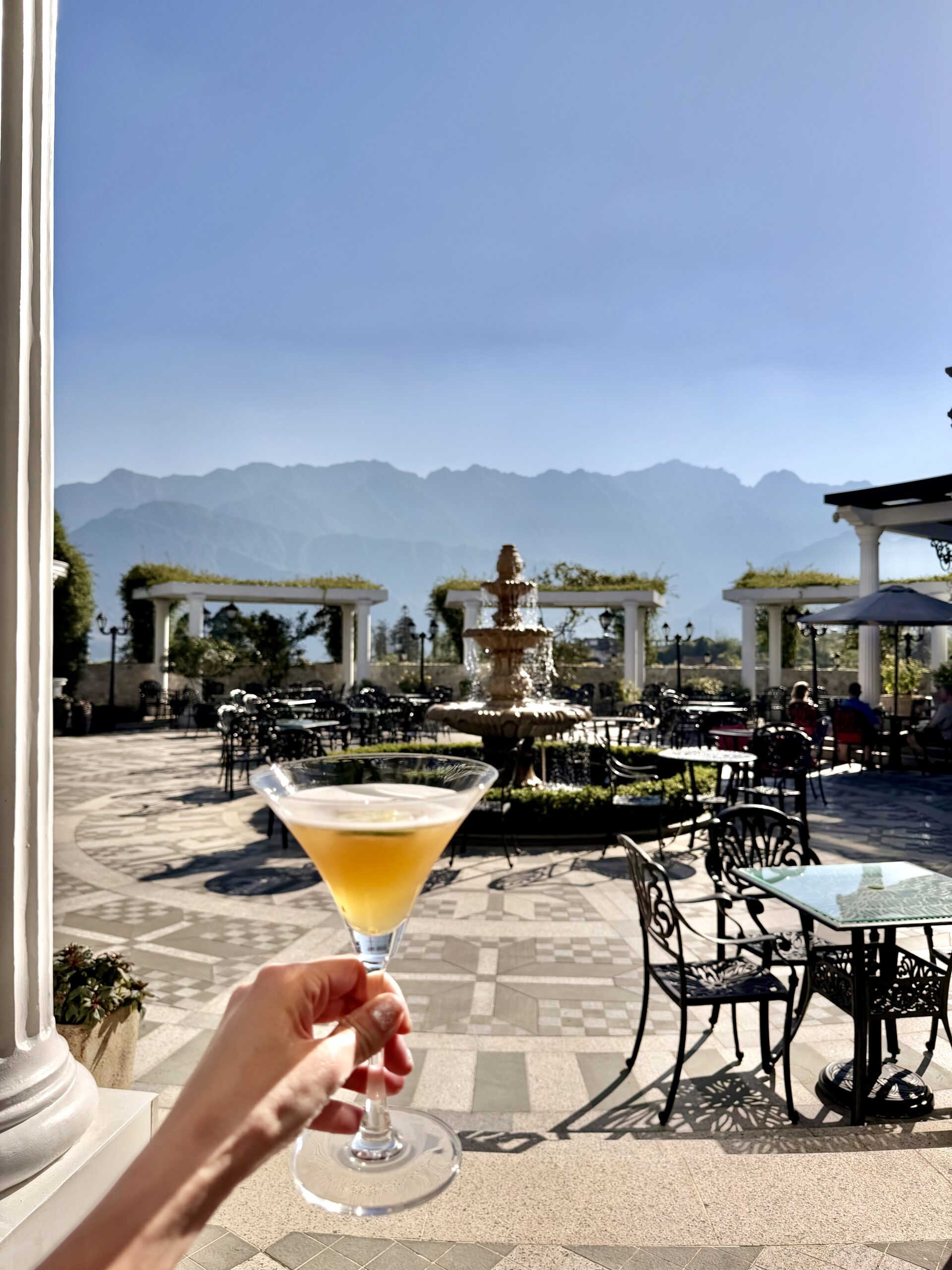
This is not a resort tucked into the middle of town, and that’s very much the point. Silk Path Grand Sapa is perched on one of Sapa’s highest private hills, which means that on a clear morning, you’ll open your curtains to a wall of green mountain ridges, and on a misty one – which happens often enough that locals have a name for it, mây mù (sea of clouds) – you’ll look out over an actual ocean of white cloud settled in the valley below you, with just the mountain peaks poking through. I am not exaggerating when I say it looks fake. It doesn’t feel like a photo filter; it feels like you’ve been quietly relocated to a different planet.
The resort is a short drive from Sapa town centre, close enough for an easy visit to the market, church square and lakeside promenade, but far enough that you genuinely get silence – the kind of silence you forget exists when you’ve spent the last week in Hanoi traffic.
📍 Address: Doi Quan 6, Group 5, Sapa, Lao Cai Province, Vietnam 📞 Phone: +84 214 3788 555

Rooms: I Stayed in a Bungalow (and Yes, You Should Too If You Can)
Silk Path Grand Sapa has 152 rooms across six floors, and the accommodation is genuinely varied enough that couples, families and solo travellers are all catered for without anyone feeling like an afterthought. A quick rundown of what’s on offer:
- Balcony Classic Garden View – the entry-level category (around 33 sqm), still with its own balcony, comfortable for two
- Balcony Junior Suite / Balcony Executive Suite – larger, with a separate sitting area and mountain views, ideal if you want a bit more space to spread out after a day of trekking
- Duplex King – a split-level layout for guests who like a bit of drama in their floor plan
- Balcony Mountain View rooms with Free Herbal Bath – exactly what it sounds like, and worth booking on principle alone
- Family Bungalow – where we stayed, and the pick of the litter if you can get one
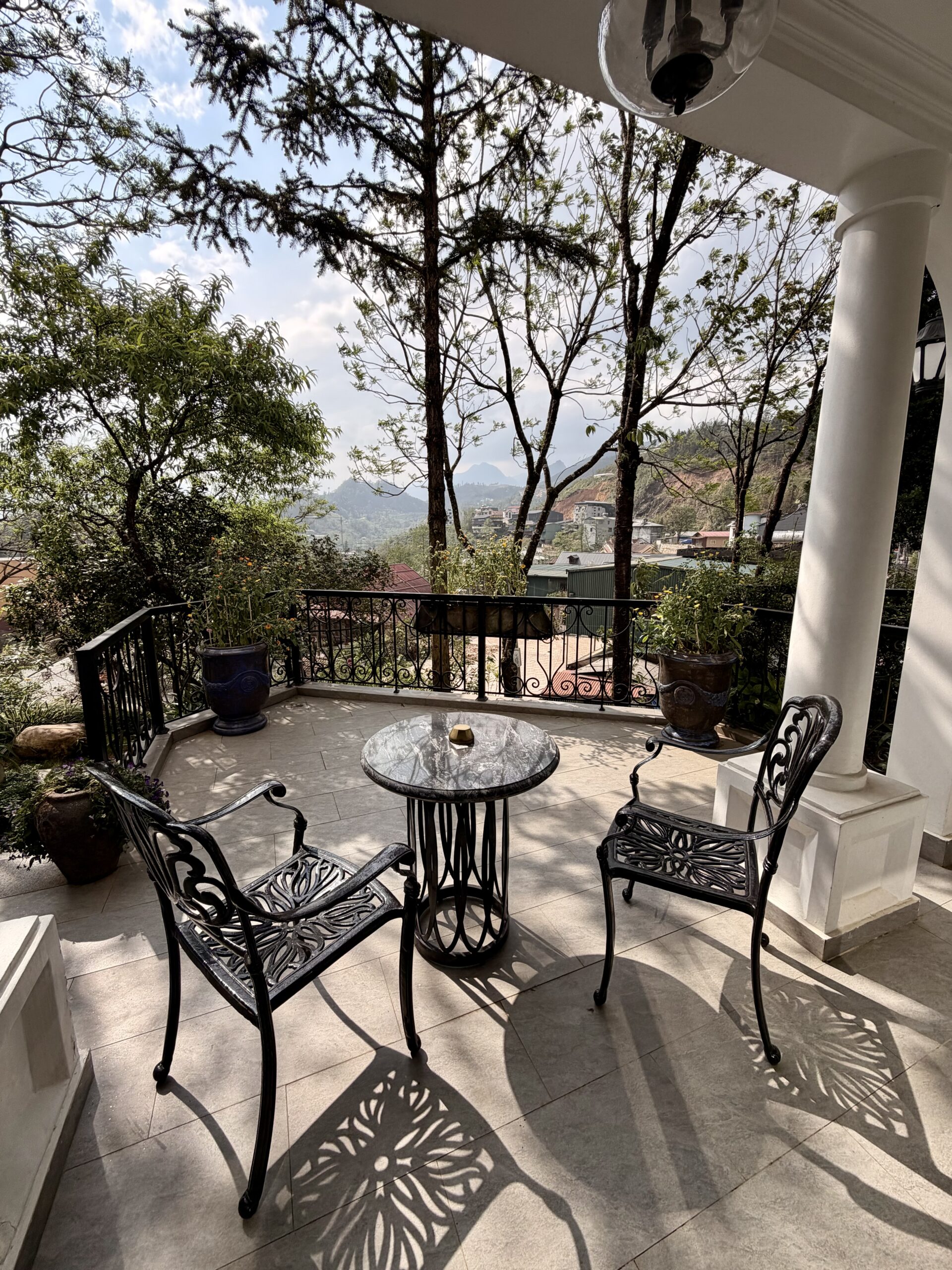
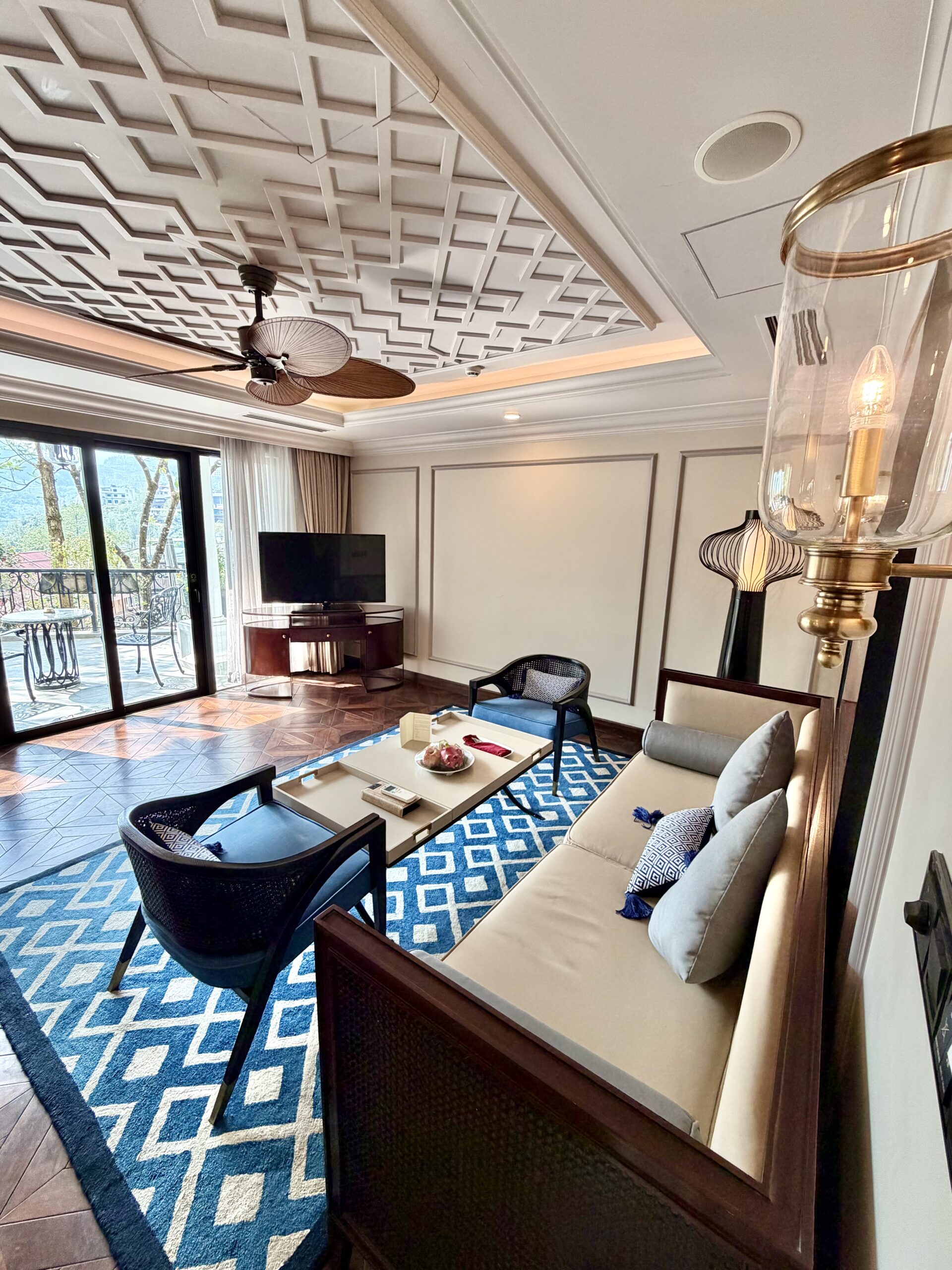
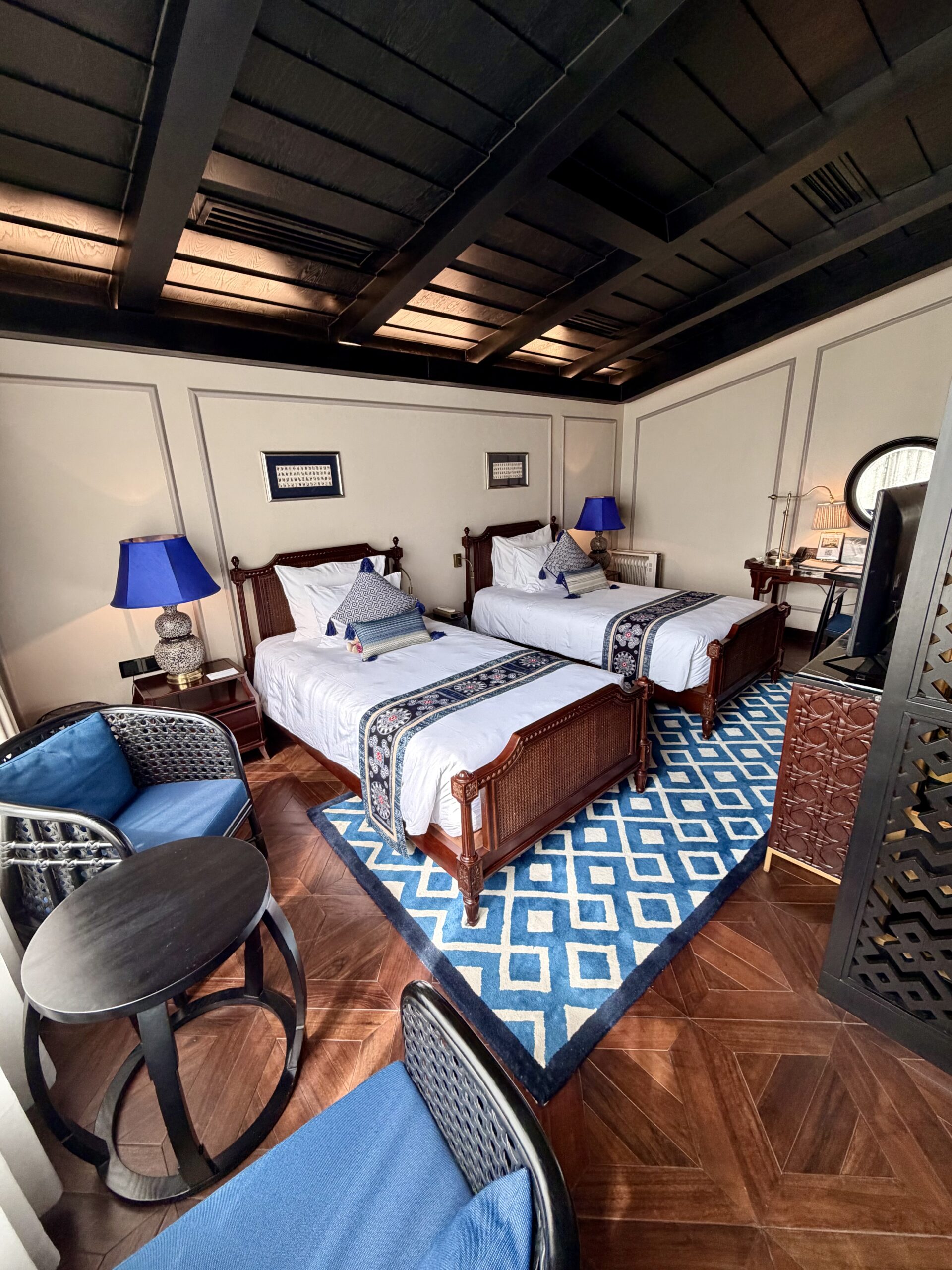
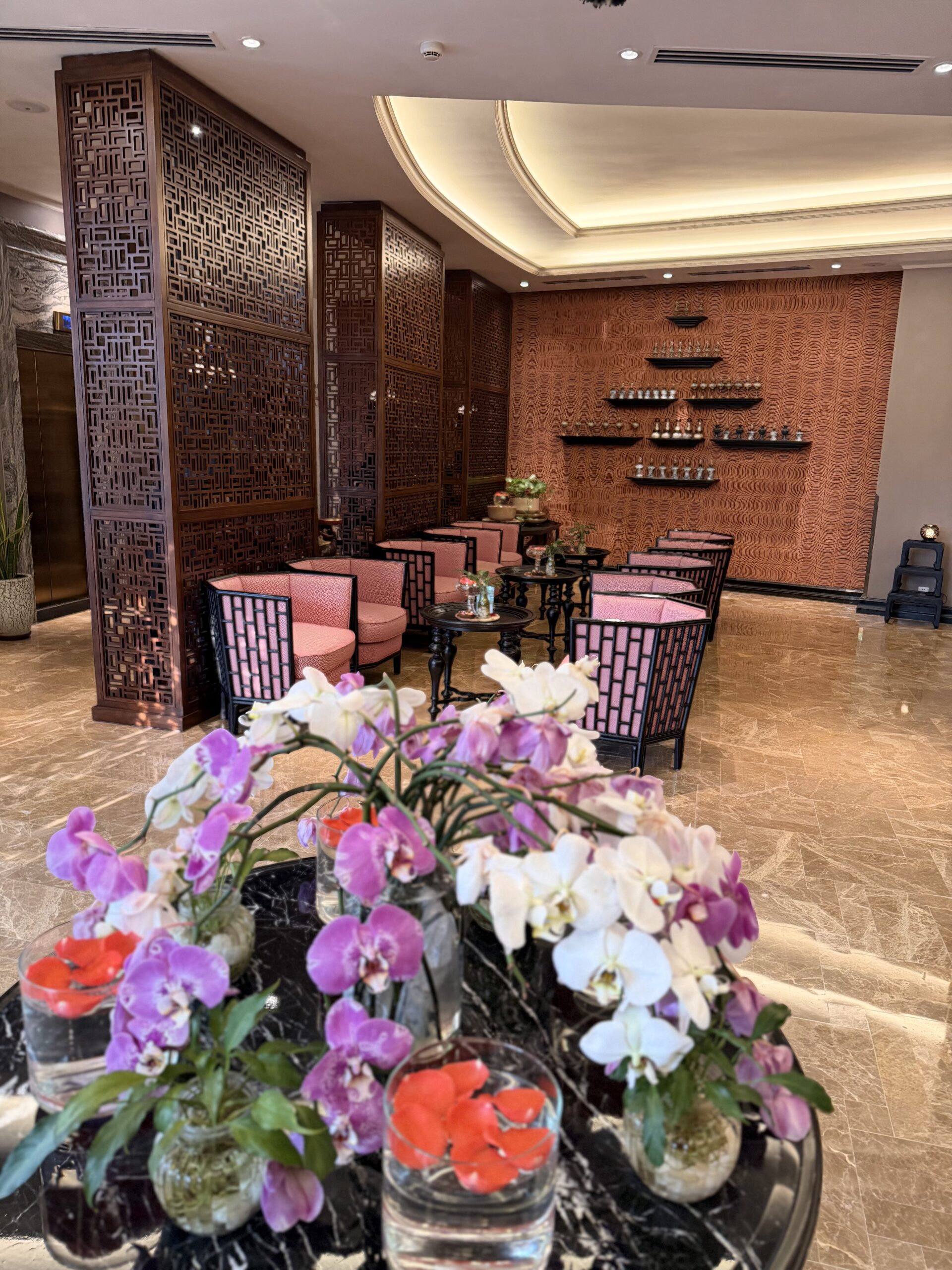
Our bungalow had its own private balcony overlooking the gardens and mountains beyond, a proper separate sitting area, and enough space that it genuinely felt like staying in a small mountain cottage rather than a hotel room – colonial-style furniture, warm wood tones, and just enough Sapa textile detailing worked into the decor to remind you exactly where you are. If you’re travelling as a couple or a small family and want a bit more privacy than a standard room offers, it’s worth requesting a bungalow specifically when you book.

The Spa: That Herbal Bath Everyone Talks About
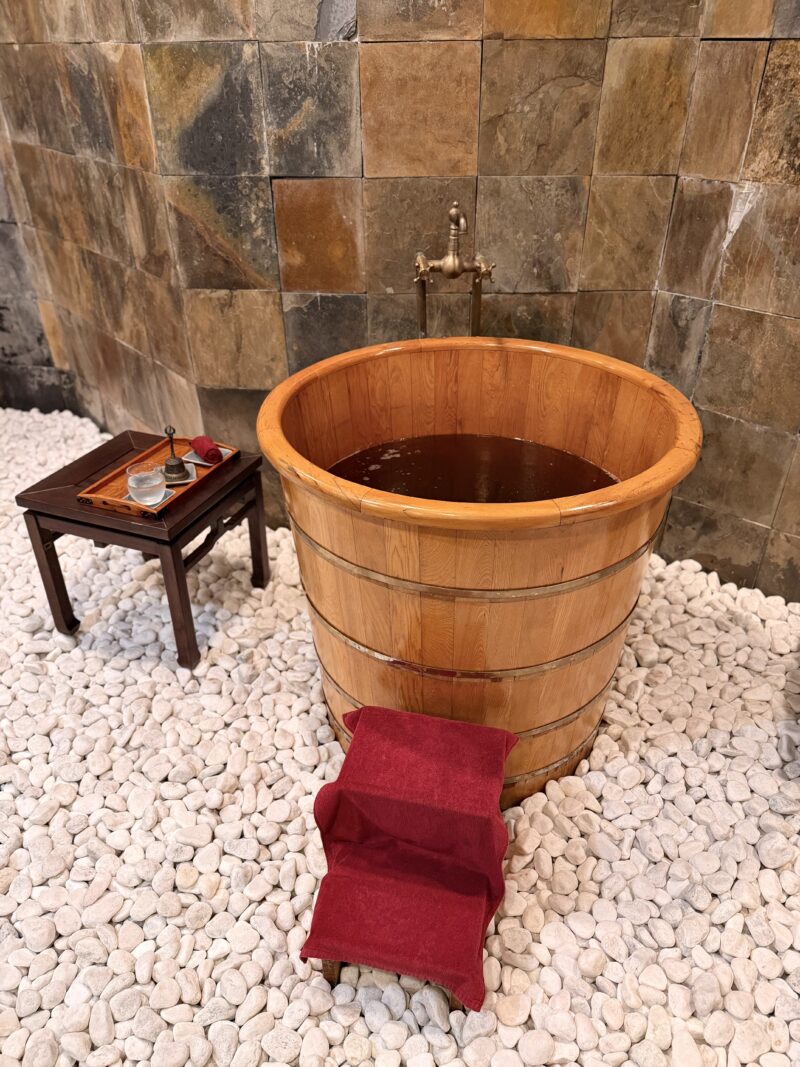
The resort’s Chi Spa is built around the idea of “physical and spiritual harmony,” which sounds like classic spa marketing until you actually try the traditional Dao herbal bath – a local Sapa specialty using a blend of forest herbs and roots gathered from the surrounding hills, traditionally used by the region’s Red Dao ethnic community for centuries to ease muscle aches after long days working the terraced fields. After a day of hiking, it’s less a “nice extra” and more of a genuine necessity – I came out of it loose-limbed, warm to the bone, and about 40% less likely to complain about my calves the next morning.
Several room categories include a complimentary herbal bath session, so it’s worth checking that when you book if it’s a priority for you (and honestly, it should be).

Diva Karaoke: The Most Unexpectedly Wonderful Evening of the Trip
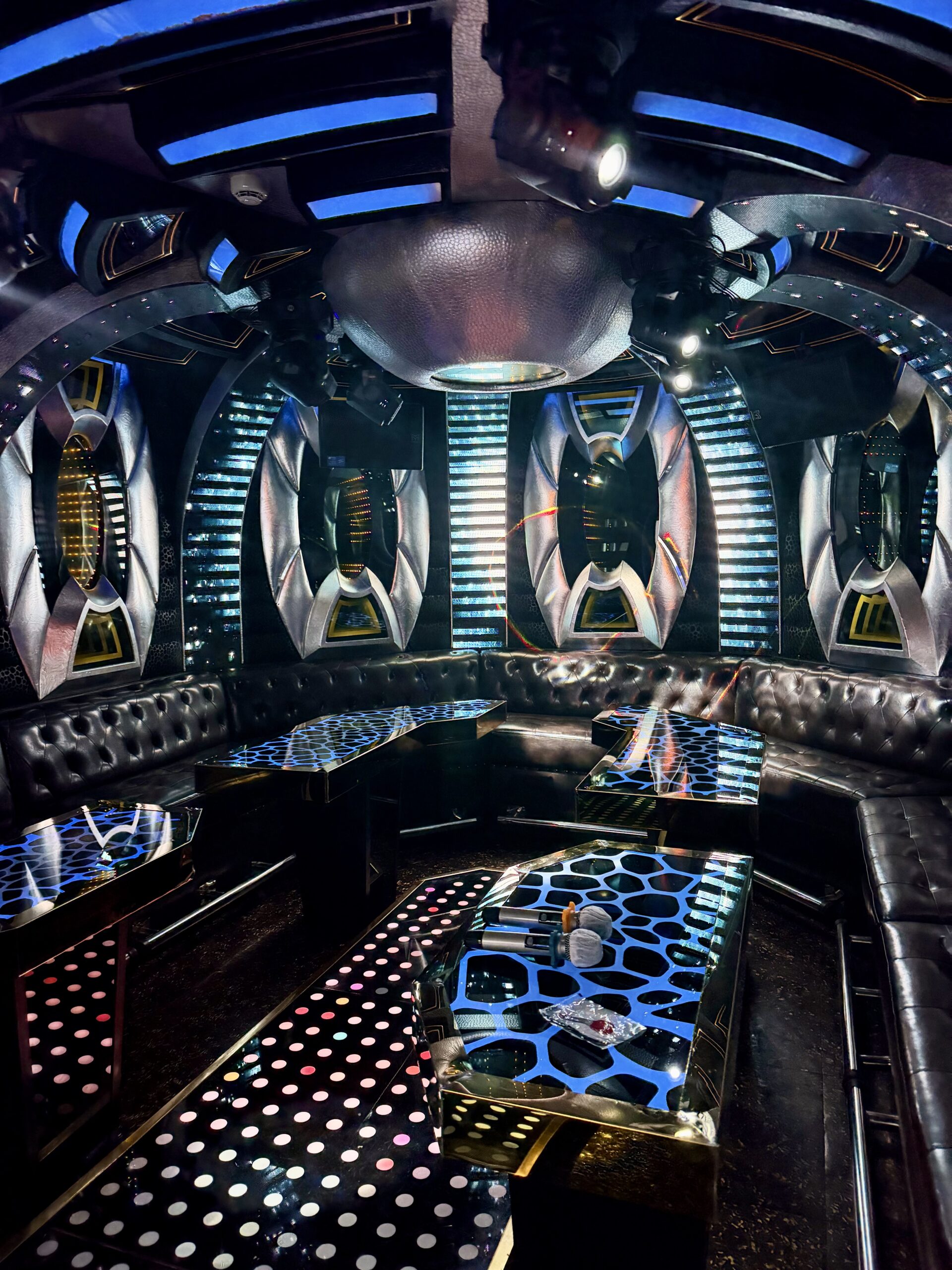
I’ll be honest – I did not expect a karaoke room to be a highlight of a luxury mountain resort review, and yet here we are. Silk Path Grand Sapa’s Diva Karaoke rooms give you a private space entirely to yourselves – no shared booths, no strangers judging your key changes – with proper mood lighting and a sound system that makes even the most questionable rendition of a power ballad feel like a genuine performance.
We booked a single evening there almost as an afterthought, and it turned into one of the most joyfully ridiculous nights of the entire trip – dim, colourful lighting, good acoustics, and just enough privacy to fully commit to your worst vocal decisions without an audience. If you’re the kind of traveller who assumes karaoke is a “back home” activity, this is the one to break that rule for.

Dining: Four Restaurants, One With the Highest View in Indochina
Sapa dining at Silk Path Grand Sapa spans four distinct venues, each doing something a little different:
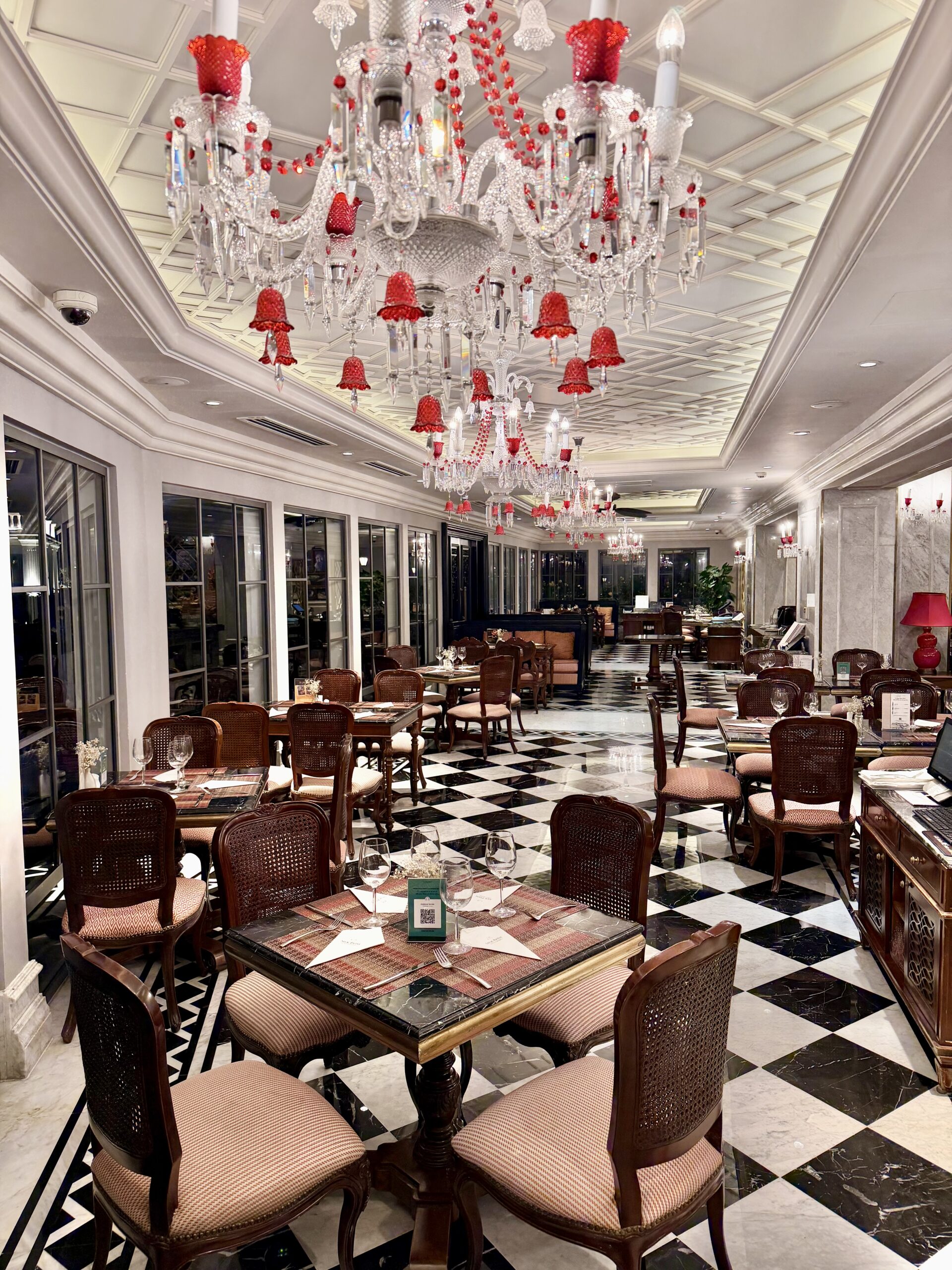
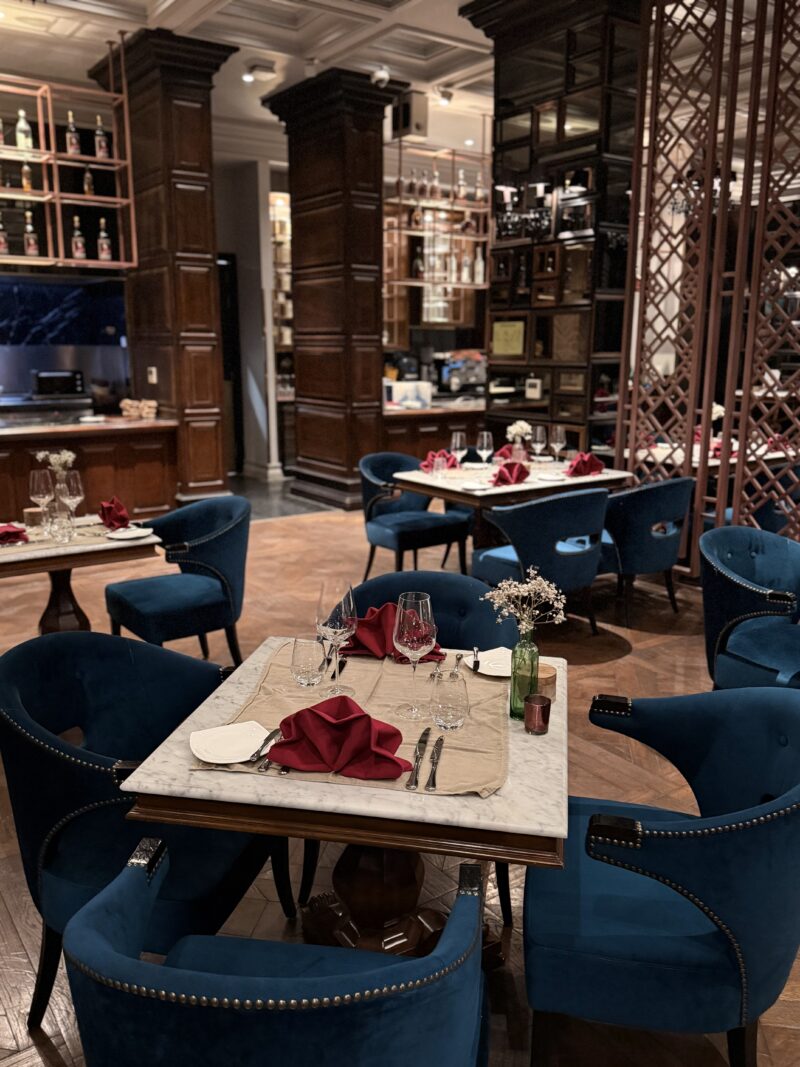
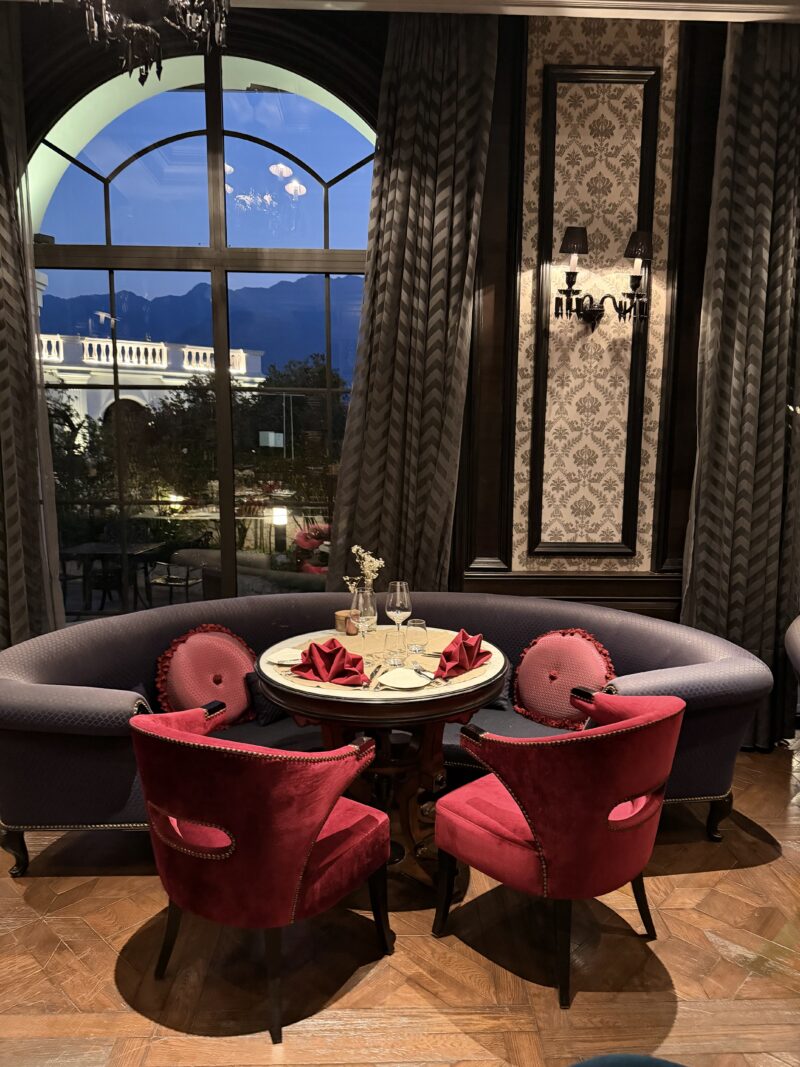
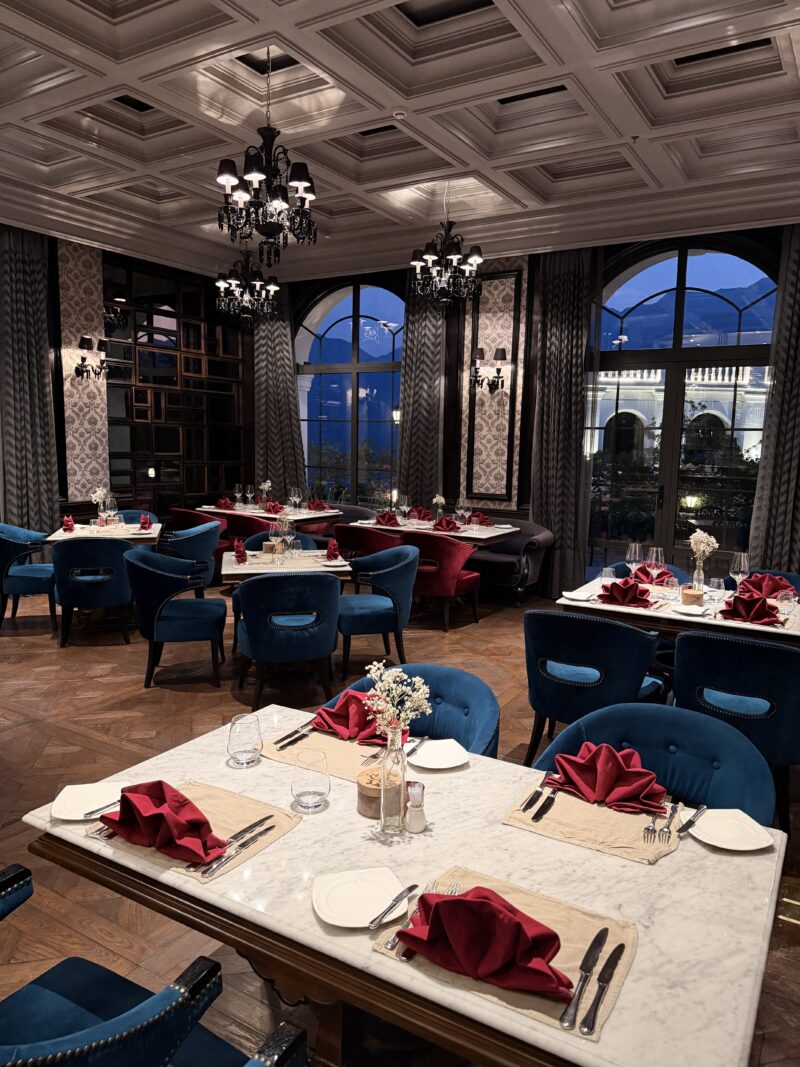
- Samu Restaurant – the resort’s all-day dining spot, serving both Vietnamese highland specialties and international comfort food; this is where breakfast and dinner happen, and the breakfast buffet in particular earns its five-star billing with live cooking stations and genuinely good coffee (a rarer combination than it should be). We ate breakfast and dinner at Samu most days, and it consistently delivered – a proper mix of Western and Vietnamese dishes, staff who clearly know the menu inside out, and enough variety that we never once felt like we were eating the same buffet twice.
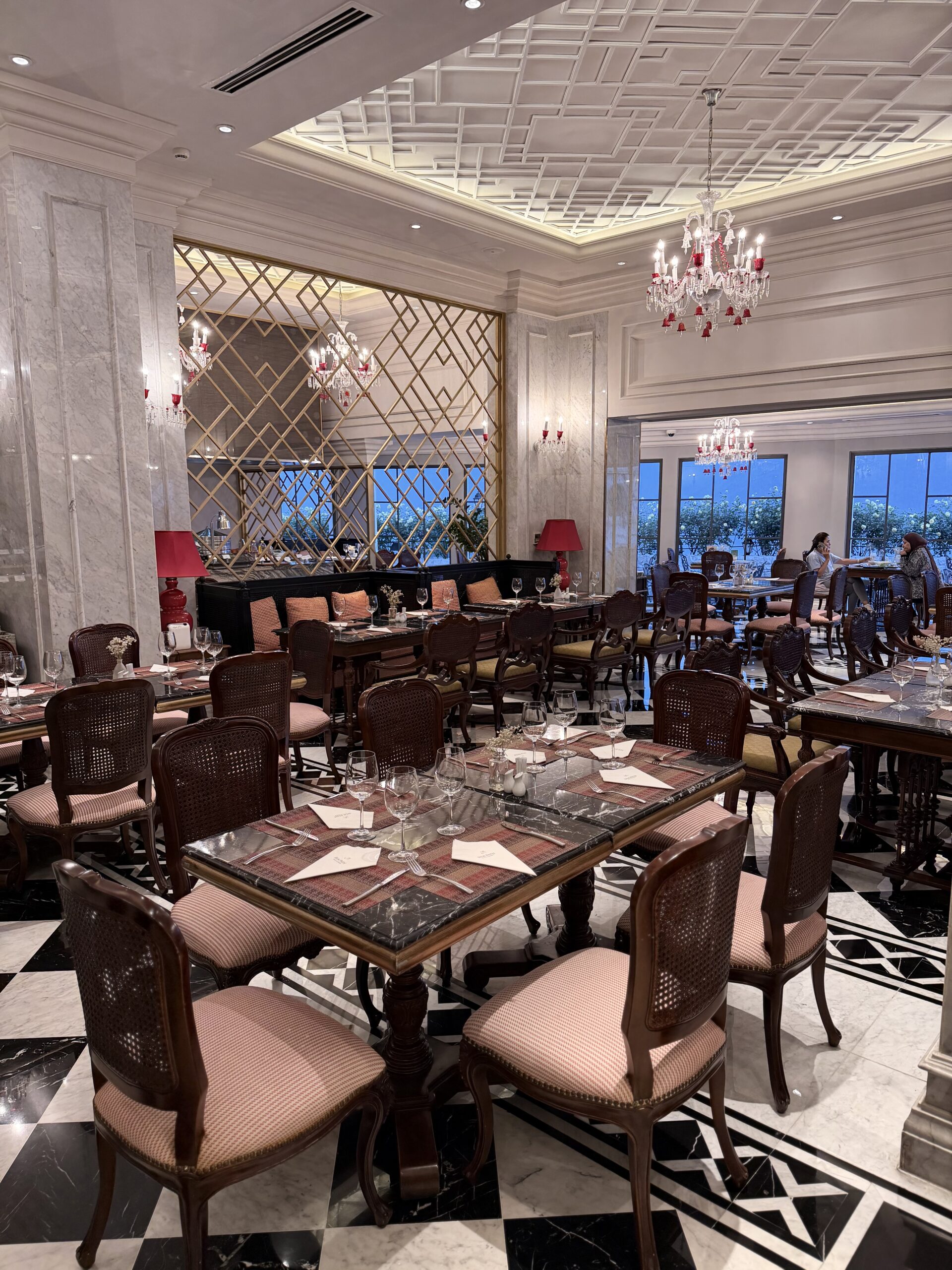
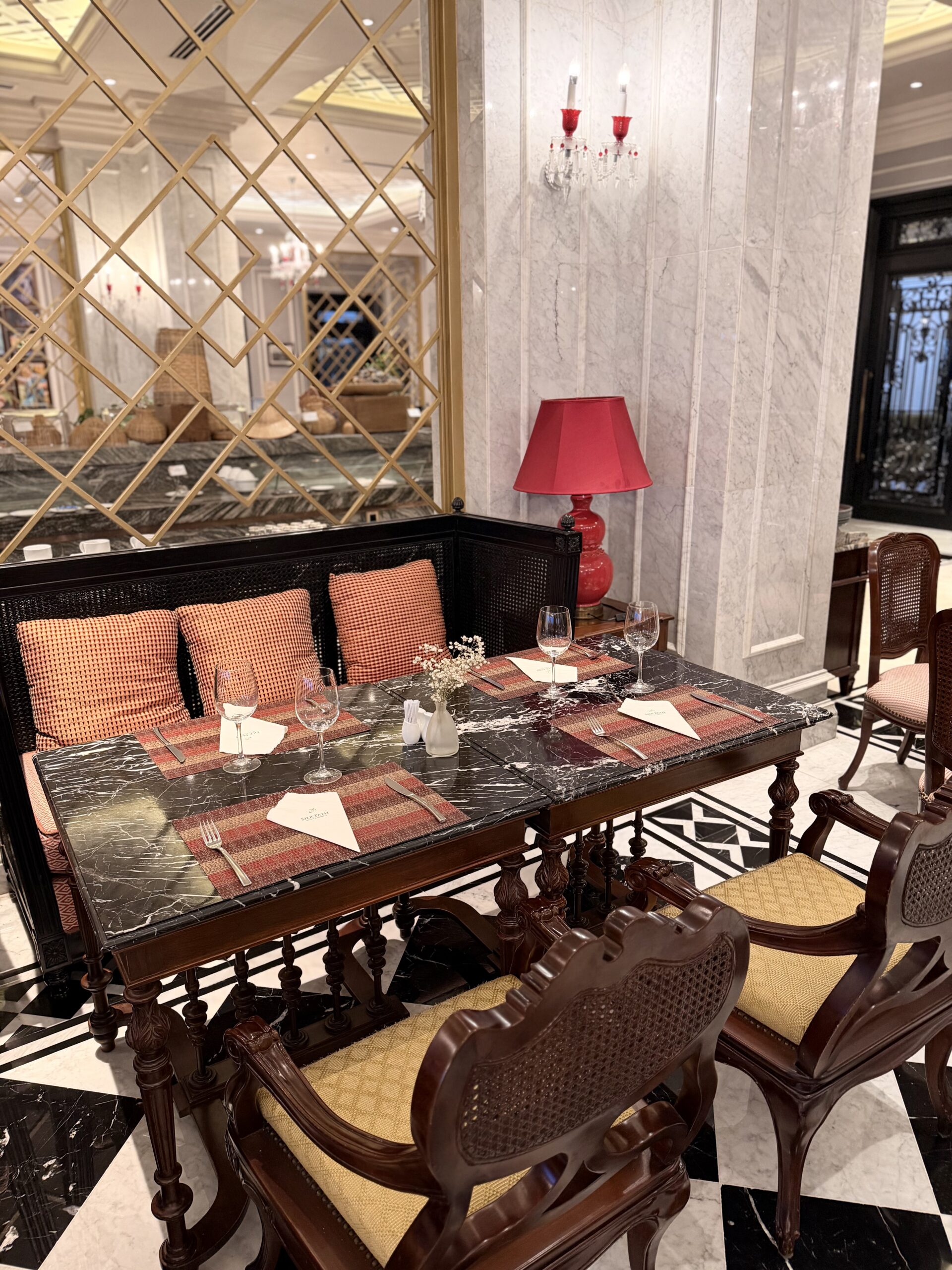

- Café 1500 – named, cheekily, for its elevation, and set at what the resort bills as the highest point in Indochina to enjoy a coffee or light bite; the views from up here do a lot of the talking
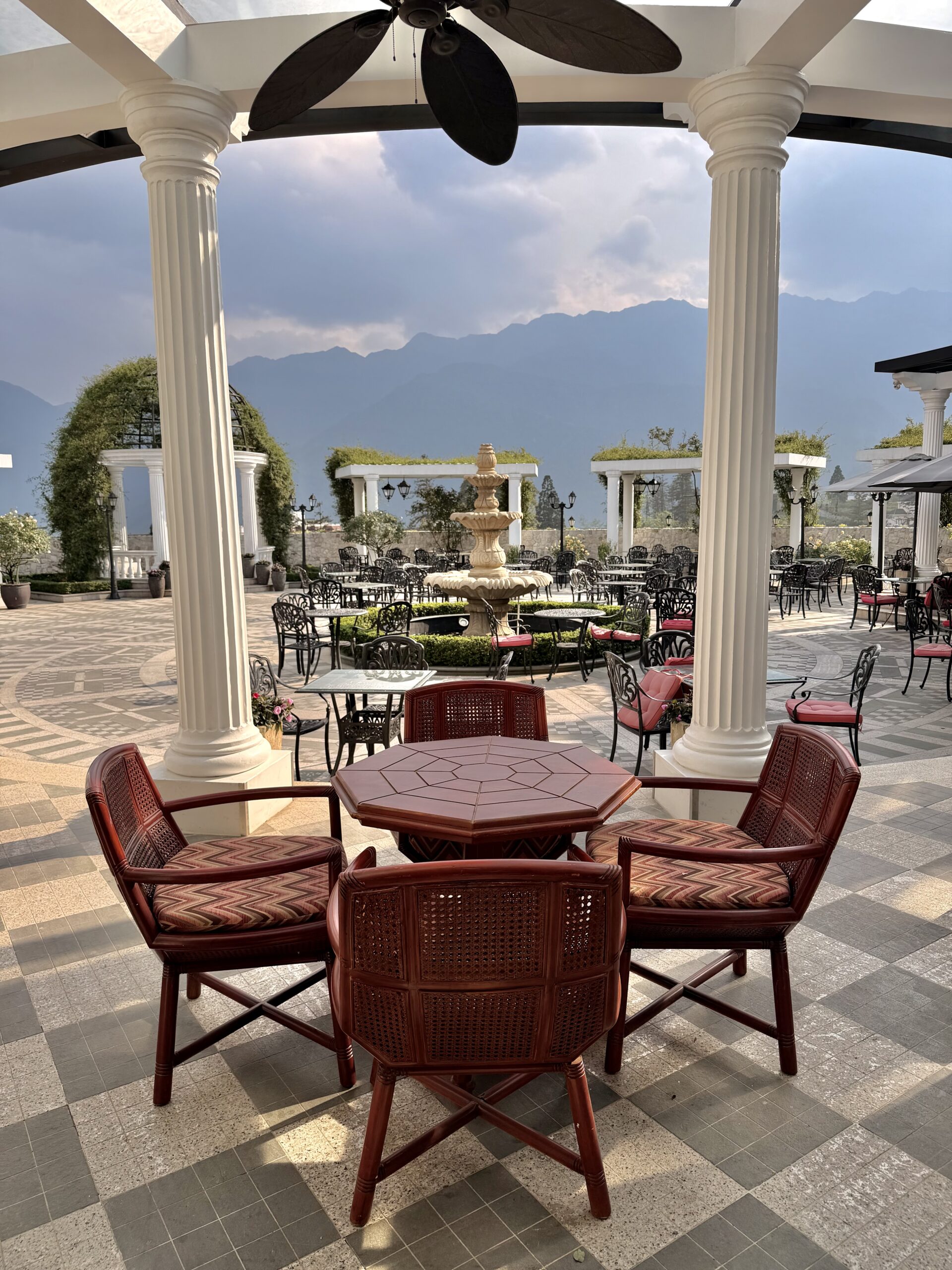
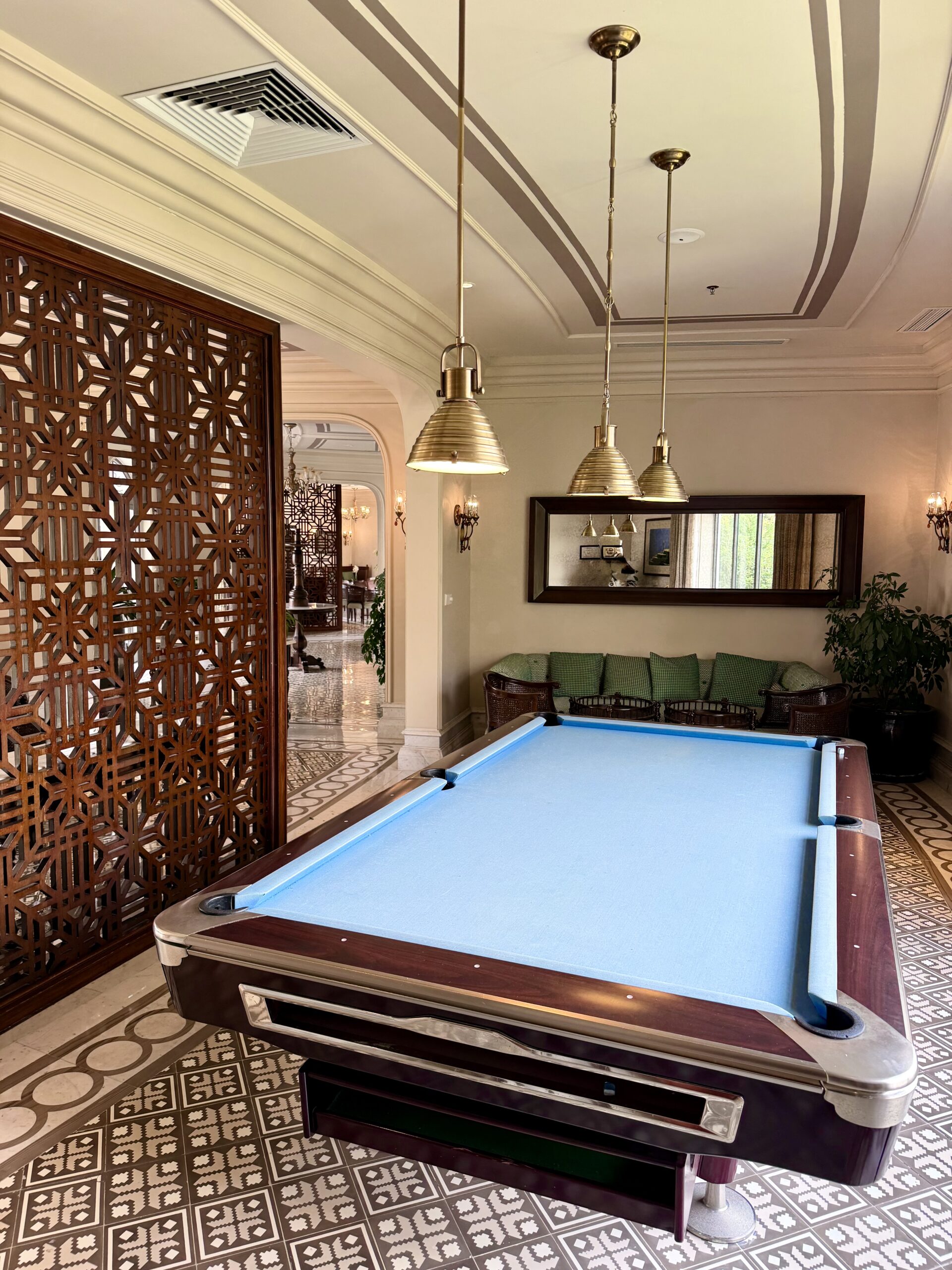

- Olivio – the resort’s Italian restaurant, for the evening you want pasta instead of pho, which, after a week of incredible but relentless Vietnamese food, is sometimes exactly what you need.


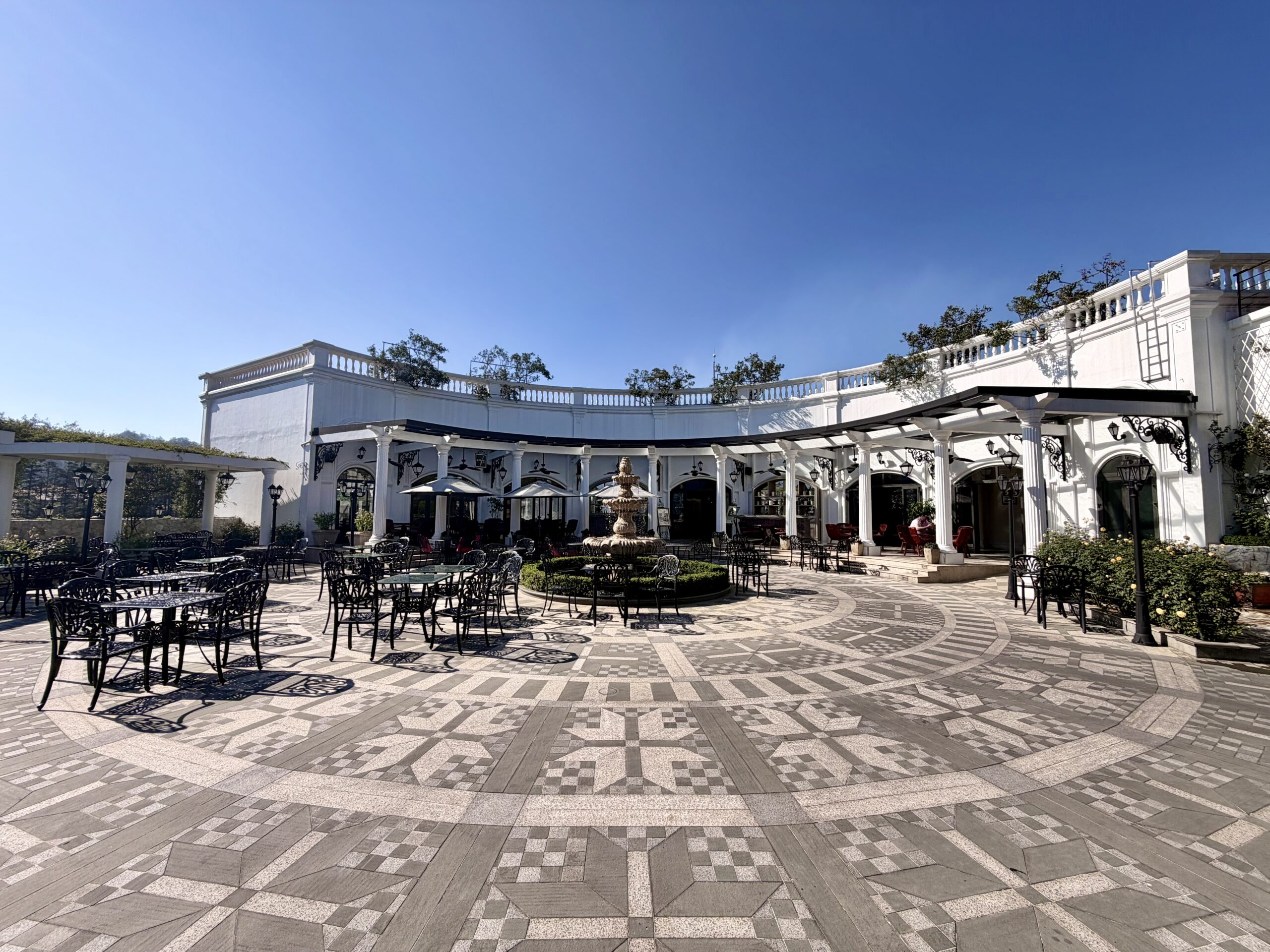
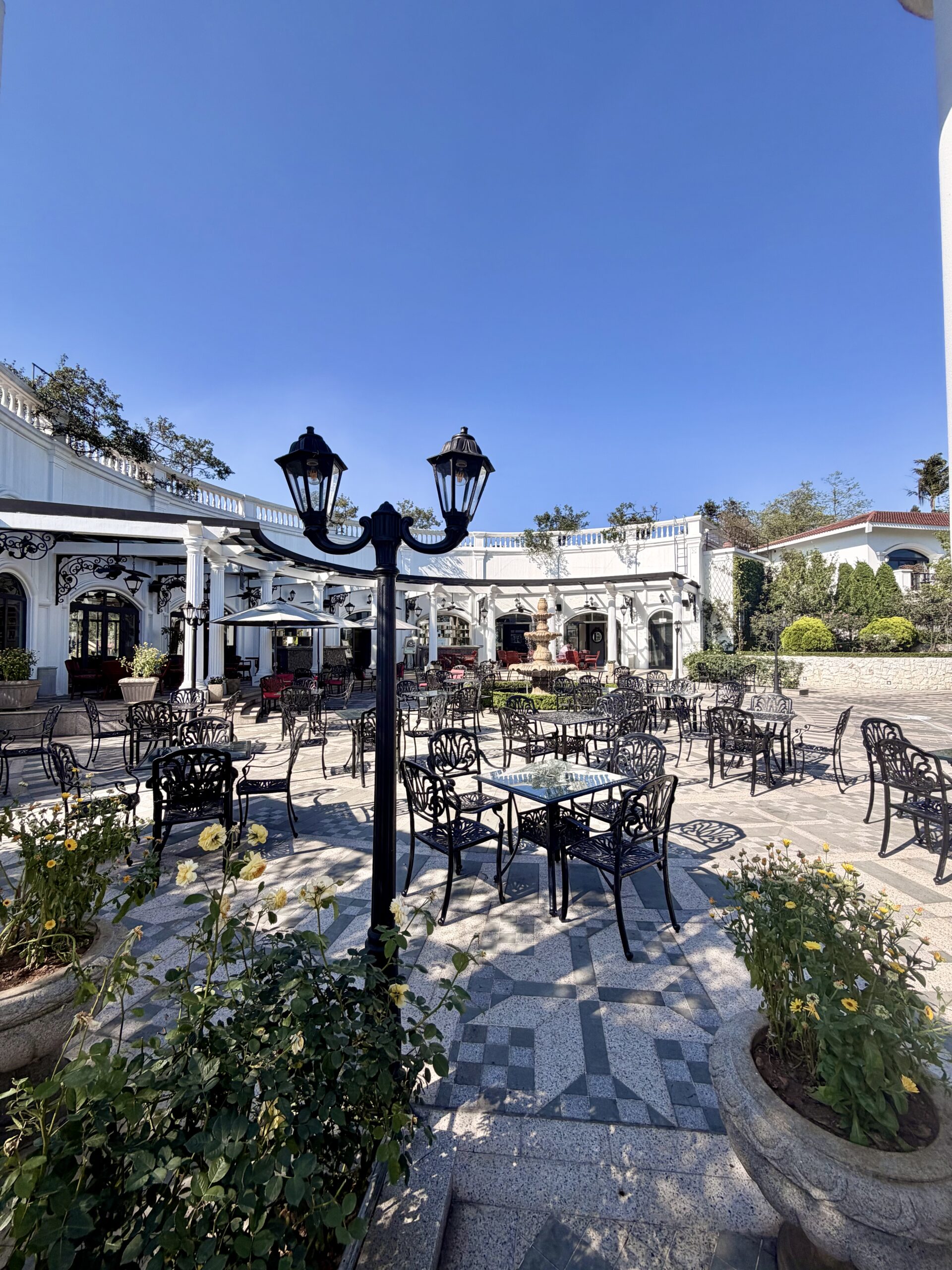
- The (Then) Yard – the outdoor garden dining space, best enjoyed on a clear evening with the mountains fading into silhouette behind you

Concierge: A WhatsApp Message Away
One small but genuinely useful detail – the resort’s concierge team can be reached directly via WhatsApp, which made arranging everything from tour tickets to dinner reservations refreshingly easy without having to physically track someone down in the lobby every time we had a question. If you’re the kind of traveller who likes to sort logistics from your room (or your balcony, more accurately, given the view), this is a small feature that makes a real difference.
Staff: Friendly Doesn’t Quite Cover It
Every single interaction we had with the team here, from housekeeping to the servers at Samu, felt genuinely warm rather than performed. Staff went out of their way more than once – helping us sort out transport details we hadn’t even asked about yet, checking in on us without hovering, and generally making the whole stay feel personal rather than processed. It’s the kind of hospitality that’s hard to manufacture and easy to notice when it’s missing elsewhere.
Weather & Packing for Sapa
- Temperatures: 15–24°C by day, 10–15°C at night – cooler still at higher altitudes, so layer accordingly
- Rain: Occasional light showers are common; pack a compact umbrella or a light rain jacket rather than relying on hope
- Clothing: Layered outfits, waterproof hiking shoes, a hat, sunglasses, and a scarf for chillier evenings
- Sun protection: UV is surprisingly high at altitude – use SPF 50+ even on cloudy days, since the cloud cover is deceptively unprotective
- Camera gear: A wide-angle lens for the landscapes, a tripod for low-light shots, and a waterproof cover for misty conditions (the mist will find a way into everything)
Health & Safety Basics
- Altitude: Sapa town sits at around 1,600m – give yourself roughly 24 hours to acclimatise before anything strenuous
- Hydration: Bring a reusable water bottle and drink more than you think you need, especially while trekking
- Trekking safety: Use local guides for longer or off-the-beaten-path routes; trails can turn muddy and slippery with little warning
- Insect repellent: Not a major concern outside the wetter months, but worth packing a small bottle for village visits regardless
Transport & Logistics Around Sapa
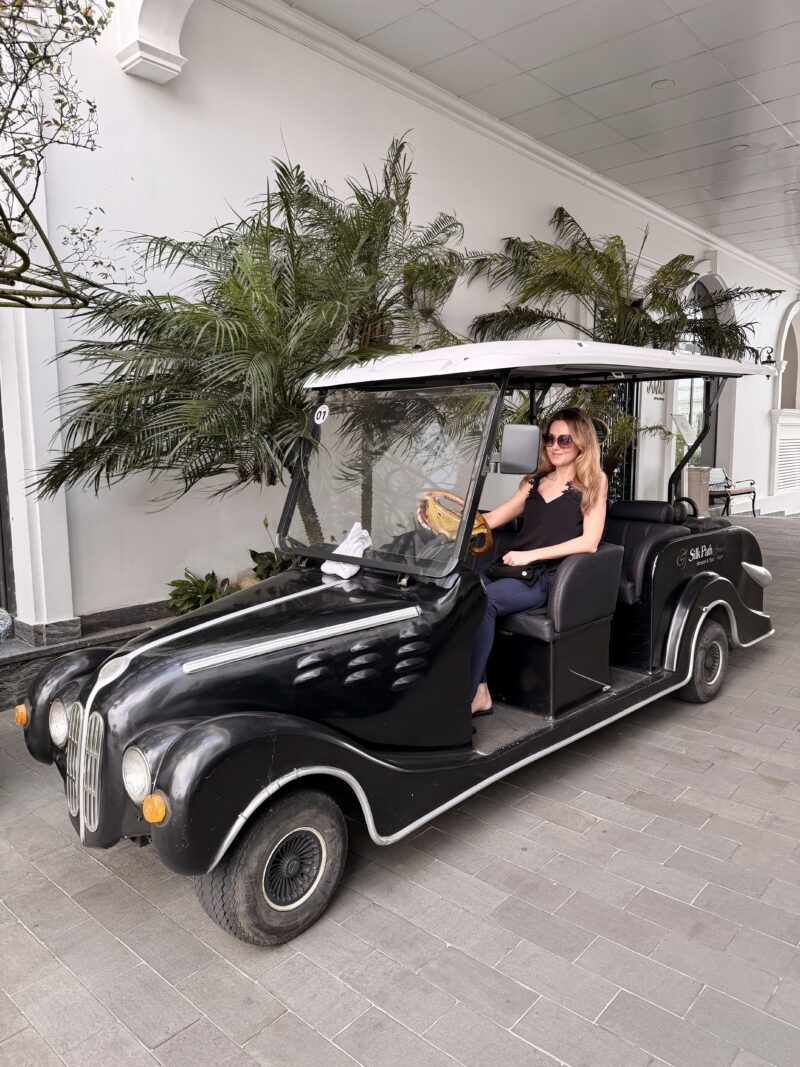
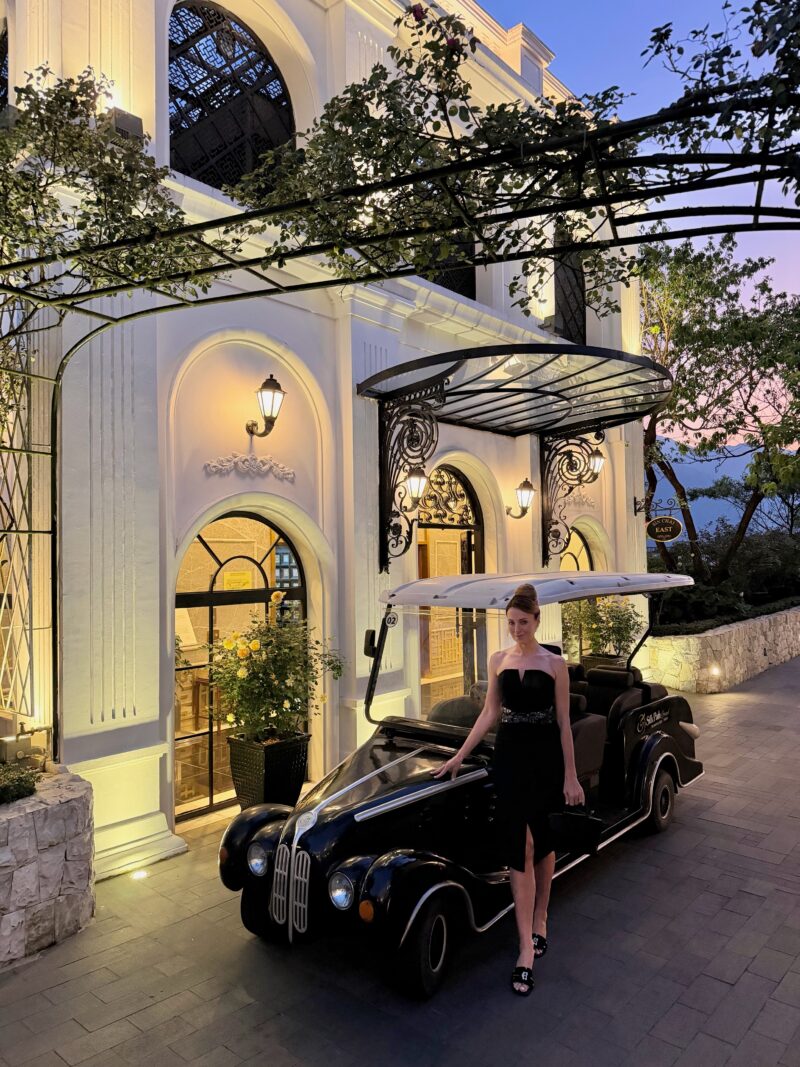
- Local transport: The hotel shuttle, local taxis, electric buggies around town, and app-based motorbike taxis all cover short trips easily
- Attraction tickets: Most sites charge a small entry fee, typically 20,000–150,000 VND – bring cash, as cards aren’t reliably accepted at smaller attractions
Is It Worth It?
If you’re building a North Vietnam itinerary and wondering whether Sapa deserves more than a rushed overnight stop, this resort makes the case for slowing down. Between the mountain views, the herbal bath, an unexpectedly brilliant karaoke night, and a level of staff warmth that’s hard to fake, Silk Path Grand Sapa Resort & Spa turned what could have been “just the mountain leg” of our trip into one of its clear highlights.


Quick Facts: Silk Path Grand Sapa Resort & Spa
| 📍 Address | Doi Quan 6, Group 5, Sapa, Lao Cai Province, Vietnam |
| 📞 Phone | +84 214 3788 555 |
| Opened | November 2017; certified Sapa’s first 5-star resort in September 2018 |
| Size | 152 rooms across 6 floors, on a private 2-hectare hilltop |
| Restaurants | 4 – Samu, Café 1500, Olivio, The Yard |
| Signature experiences | Traditional Dao herbal bath, Diva Karaoke private rooms, Chi Spa |
| Best time to visit | September – November (golden rice terraces) or March – May |
| Typical temperatures | 15 – 24°C by day, 10 – 15°C at night |


